
Mobile Application Development
That Engages Users &
Drives Business Growth
Expert mobile application development for iOS and Android.
We build custom apps that engage users and drive revenue.
From concept to launch, we handle everything.
Why Custom Mobile App Development Matters in 2025

Today, people use mobile phones to shop, learn, and buy. Therefore, mobile app development is now a core growth channel. First, we align app goals with business goals. Then, we design features for real user needs. As a result, your app solves clear problems and brings clear value.
Users expect fast, simple, and stable app experiences. However, many apps lose users when speed or flow feels uneven. So, our mobile app development approach combines UX, clean code, and careful testing from day one. As a result, your app feels smooth on iOS, Android, and cross-platform builds.
We support delivery from idea to growth. In addition, we stay involved after launch to improve retention and revenue. Next, we track usage and remove friction points. Finally, we ship updates based on data, not guesswork. This is how strong app development creates long-term business value.
Professional Mobile Application Development Services

iOS App Development
First, we build iOS apps with the latest Apple tools. Then, we optimize for iPhone and iPad screen behavior. As a result, apps stay fast, secure, and enjoyable to use.

Android App Development
Likewise, we build Android apps for a wide range of devices. In addition, we follow Google platform standards. Therefore, apps run smoothly, scale well, and deliver consistent user experience.
Cross-Platform Development
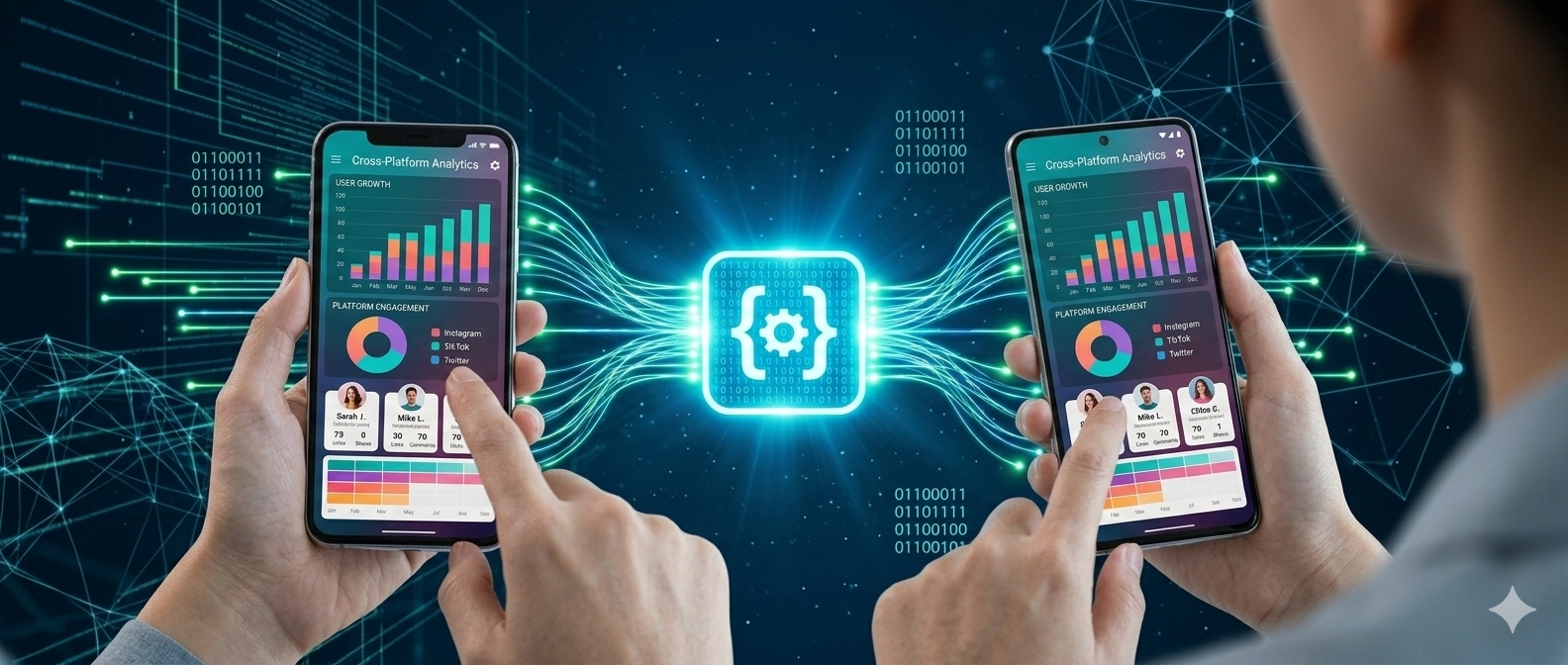
If you need faster release cycles, we use React Native or Flutter. As a result, one codebase can support iOS and Android. Consequently, you reduce cost, shorten delivery time, and still keep strong performance.
Our Mobile Application Development Process
We use a clear process for every mobile app project. First, we define scope and outcomes. Next, we share milestones and priorities. Then, we deliver in short cycles so you can review progress early. As a result, we stay on schedule and protect your budget.

1. Discovery & Strategy
First, we learn your goals, audience, and market context. Then, we review competitors and key gaps. Based on that, we choose the right stack for your roadmap, whether native iOS, native Android, or cross-platform.
2. Design & User Experience
Next, we design flows, wireframes, and high-fidelity screens. Also, we test key journeys before full build. Therefore, your app looks strong and feels simple to use. In turn, users complete actions faster and stay engaged longer.
3. Development & Implementation
Then, we build with modern frameworks and clean code patterns. In addition, we set up APIs, analytics, and secure data handling. As a result, your app foundation stays easy to maintain as features and traffic grow.
4. Quality Assurance & Testing
After development, we run structured QA on real devices. We test function, speed, accessibility, and security. Moreover, we validate edge cases and recovery paths. Consequently, your release quality stays high across device types.
5. Launch & Support
Finally, we support launch on the Apple App Store and Google Play. We also monitor performance, fix issues quickly, and plan post-launch updates. Therefore, your investment keeps improving after go-live.
Listen: Expert Insights on Mobile App Development
First, learn what drives app success. Then, compare team models and delivery options. Also, review the latest iOS and Android updates. As a result, you can make better product decisions for growth.
Topics covered: Mobile app strategy, native vs. cross-platform development, user experience design, agile methodology, quality assurance, app store optimization (ASO), testing, post-launch support, and scaling.
Benefits of Mobile Application Development
Mobile apps bring clear gains for both your business and your users. As a result, engagement, retention, and revenue can improve together.
First, apps can drive 3x more sales. Next, users view 4.2x more items. Also, app sessions often reach 20 minutes, while web sessions stay near 10 minutes. Therefore, apps usually outperform web engagement.
Moreover, apps can generate 157% more sales. The global market is $150B now and is forecast at $166.8B soon. As a result, annual growth near 13% keeps this channel highly competitive.
In retention terms, apps can keep 42% of users at 30 days. In addition, apps perform about 60% better than web in similar journeys. Furthermore, game mechanics can add 15-30% more active users.
Finally, 94% of mobile time is spent in apps. Also, 63% of users prefer app experiences. Consequently, apps continue to deliver stronger conversion and brand presence.
Our Mobile App Development Process
1. Discovery & Strategy
First, we learn your goals and user priorities. Then, we review competitors and market context. As a result, we choose the best delivery path.
2. Design & Prototyping
Next, we design the app and test key journeys early. Therefore, the interface looks strong and feels easy for real users.
3. Development & Integration
Then, we build with modern frameworks and clean standards. In addition, we connect analytics and backend services where needed.
4. Testing & Quality Assurance
After that, we run full QA across function, speed, and security. Consequently, release quality stays high.
5. Launch & Deployment
Next, we launch on app stores and monitor early usage. As a result, we can fix issues quickly and protect your first-week performance.
6. Post-Launch Support
Finally, we deliver post-launch support, feature updates, and optimization. Therefore, your app keeps improving as user needs evolve.
Technologies for Mobile Application Development
We use proven modern technologies. For example, here is our core stack:

- iOS: Swift, SwiftUI, Xcode
- Android: Kotlin, Jetpack, Android Studio
- Cross-Platform: React Native, Flutter
- Backend: Node.js, Python, Firebase, AWS
- Databases: PostgreSQL, MongoDB, SQLite
- Cloud: AWS, Google Cloud, Microsoft Azure
Mobile App Development Examples
We build apps for many industries. For example, here are common project types:
- Shop apps with pay
- Chat and friend apps
- Health and fit apps
- Home apps
- Book and trip apps
- Video and play apps
Each solution is tailored to your goals. As a result, apps stay fast, scalable, and useful for end users.
Why Choose Terra Connect for Mobile App Development?
If you need a reliable delivery partner, we are a strong fit for growth-focused teams.
Best Team
First, our team ships iOS, Android, and cross-platform products. In addition, we apply modern tooling and strong engineering standards.
User Focus
Next, we design for user behavior, not guesswork. Also, we validate interfaces with real users before broad rollout.
Talk to Us
Then, we keep communication clear and frequent. Therefore, you always know status, risks, and next steps.
We Do All
After planning and design, we build, test, and launch with a clear roadmap. Finally, we support long-term product growth.
We Have Proof
Moreover, we have delivered products for startups and larger firms. As a result, millions of users have used apps built with our process.
Mobile App Development for Your Industry
We work across multiple sectors. Therefore, we can adapt quickly to your domain needs and compliance requirements.
Shop Apps
For ecommerce, we add payment, inventory, and promotion flows. As a result, teams can sell more with less manual work.
Health Apps
For health and wellness, we build telehealth, fitness, and tracking experiences. In addition, we design with strong data protection.
Money Apps
For finance, we build secure banking and payment features. Also, we align development with required standards and controls.
Home Apps
For property platforms, we implement search, listing data, and virtual tours. Consequently, buyers and agents get faster decisions.
Trip Apps
For travel, we build booking and itinerary flows. As a result, users can plan quickly and return more often.
Learn Apps
For education, we build learning apps with class tools and progress tracking. Therefore, learners stay engaged over time.
Talk Apps
For social products, we build messaging and community features. Also, we optimize real-time performance for smoother conversations.
Truck Apps
For logistics, we build tracking and dispatch workflows. Consequently, teams reduce delays and improve shipment visibility.
App Store Optimization for Mobile Application Development
Build a great app. Then, optimize for downloads. We help with ASO:

Keyword Research & Optimization
We find keywords. Also, we optimize titles. Plus, subtitles. And, descriptions. So, users find you.
App Listing Optimization
We write descriptions. Also, we create screenshots. Plus, videos. Furthermore, we design icons.
Reviews & Ratings
We improve review quality and rating patterns. As a result, stronger social proof supports more downloads.
Updates
We plan release timing carefully. Therefore, your updates reach users at the right moment and keep you competitive.
Numbers & Tracking
Finally, we track rankings, listing views, and conversion performance. Then, we refine assets and metadata to keep improving results.
Mobile Application Development Costs & Timeline Guide
Project cost depends on scope, features, and release goals. However, we keep pricing clear from the start. First, we map requirements. Then, we estimate effort. As a result, your budget stays predictable.
What Sets the Price
App Size: Small apps cost less.
Which Phones: iOS costs X. Android costs Y. Both cost more.
What It Does: More work costs more.
How It Looks: Nice apps cost more.
What You'll Pay
Small: £5k-15k
Medium: £15k-40k
Big: £40k-100k
Huge: £100k+
How Long It Takes
Small: 2-3 months
Medium: 3-7 months
Big: 6-12 months
After: We help you after.
Get a Quote
Talk to us for a tailored quote. First, we review your needs and timeline. Next, we share a realistic cost range. Finally, we provide a practical delivery plan with no hidden surprises.
Mobile Application Development Planning Checklist
Before you build, define one clear business goal. For example, you may want more sales, better retention, or faster service. Then, choose two or three core user actions that support that goal. As a result, your scope stays focused and easier to deliver.
Next, validate feature priority with real users. Also, test onboarding early. However, avoid adding too many features before launch. Instead, release a strong first version and improve in short iterations. Therefore, your team moves faster and lowers risk.
After that, set technical standards before coding starts. In addition, define API contracts, analytics events, and security rules. Consequently, your process stays consistent across design, backend, and QA.
Then, prepare launch operations in parallel. For instance, plan app store assets, support workflows, and crash dashboards. Meanwhile, align your internal team on ownership and response times. As a result, launch week runs smoothly.
Finally, treat release as the start, not the end. Review funnel metrics every week. Then, remove friction points and ship improvements. Over time, this cycle helps your roadmap produce stronger retention and better ROI.
Where Mobile Application Development Creates Fast Value
First, mobile application development improves response speed for customer actions. Next, mobile application development reduces manual work in service and sales flows. As a result, teams can complete tasks faster with fewer errors.
Also, mobile application development helps businesses test ideas quickly. Then, mobile application development turns those ideas into real user journeys. Therefore, product teams can validate demand before large feature releases.
In addition, mobile application development supports stronger retention. For example, mobile application development enables push alerts, saved settings, and faster re-entry paths. Consequently, users return more often and complete more actions.
However, results depend on clear planning. So, mobile application development should start with one measurable outcome. Finally, mobile application development should continue after launch with weekly updates and performance reviews.
- Mobile application development for ecommerce: faster checkout and better repeat orders
- Mobile application development for healthcare: clearer booking and safer patient flows
- Mobile application development for finance: stronger security and simpler transactions
- Mobile application development for logistics: better tracking and faster dispatch decisions
Frequently Asked Questions
Native apps are built for one platform (iOS or Android). They offer better performance. Cross-platform apps run on both iOS and Android. They cost less but may sacrifice performance. We recommend native development for high-performance apps and cross-platform for faster launch speed. Therefore, the right choice depends on your goals, timeline, and performance needs.
Timelines vary based on app complexity. Simple mobile application development takes 2-3 months. Complex applications take 4-8 months or longer. We provide clear timelines during discovery based on your requirements. As a result, you get a realistic plan before development starts.
Mobile application development costs depend on complexity, features, design, and platform choice. Simple apps cost £5,000-£15,000. Complex applications cost £30,000 to £100,000+. We provide transparent pricing during consultation. Therefore, you can plan your budget with confidence.
Yes! We offer post-launch support including bug fixes, performance optimization, feature enhancements, and updates. As a result, your app stays compatible with new OS versions.
Yes! We optimize your app listing on Apple App Store and Google Play Store. This includes keyword optimization, compelling descriptions, attractive screenshots, and strategic pricing to maximize downloads. Consequently, your listing can gain better visibility and conversion.
Security is critical. We implement encryption, secure authentication, secure API communication, and data protection compliance (GDPR, etc.). Regular security audits protect user data. In addition, we review risks regularly to keep protection standards high.